

If you’ve been thinking about smoothing wrinkles, restoring volume, or refreshing your appearance, you’ve probably heard two treatments mentioned over and over: dermal fillers and Botox. Both are incredibly popular and for good reason but they work in completely different ways. Understanding those differences is the key to choosing the right treatment for your goals.
Here’s a clear, medically accurate, and simple explanation to help you decide.
What’s the Difference Between Fillers and Botox? (Quick Answer)
- Botox relaxes muscles to soften expression lines like frown lines, crow’s feet, and forehead wrinkles.
- Fillers add volume to areas that look hollow, thin, or sagging such as cheeks, lips, jawline, and under-eyes.
If your wrinkles only appear when you make facial expressions, Botox is usually the right choice.
If your face has lost fullness or you want contouring, fillers are typically better.
Now let’s explore everything in detail.
What Is Botox? (Medically Accurate but Easy to Understand)
Botox is a neuromodulator made from purified botulinum toxin type A.
When injected in tiny amounts, it temporarily relaxes the targeted muscles by blocking nerve signals. This prevents the repetitive contractions that create dynamic wrinkles.
Best For Treating:
- Forehead lines
- Frown lines (11s)
- Crow’s feet
- Bunny lines
- Lip flip
- Neck bands
- Masseter slimming (jawline reduction)
How Long It Lasts:
3–4 months on average, depending on metabolism and muscle strength.
How It Works:
Botox doesn’t “fill” the wrinkle — instead, it stops the muscle from folding the skin, allowing the skin to smooth itself naturally.
Ideal For People Who Want:
- A smoother, more relaxed look
- Prevention of future wrinkles
- A subtle, natural change
- Quick treatment with no downtime
What Are Dermal Fillers? (Collagen-Supporting, Volume-Restoring)
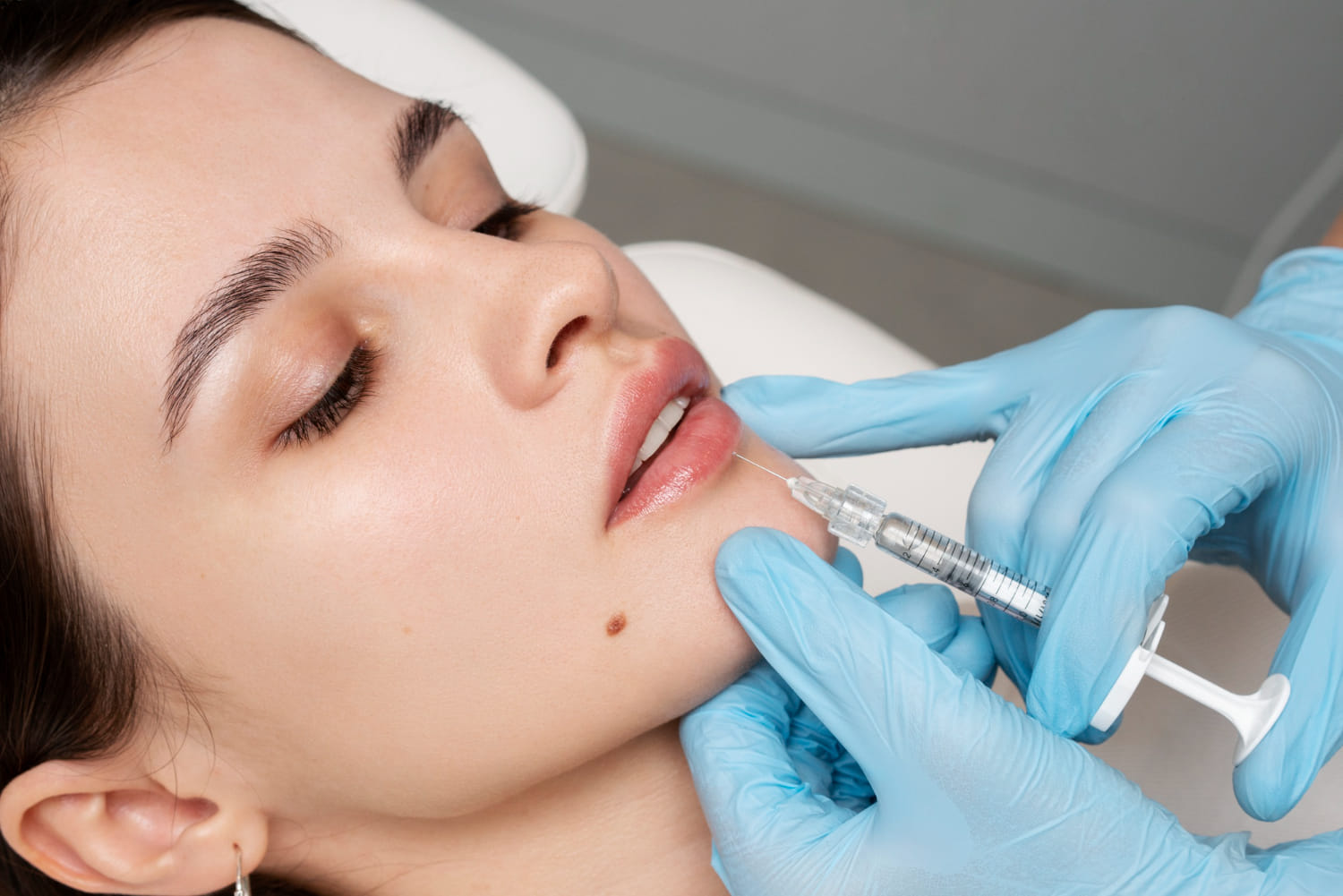
Dermal fillers are gel-like substances injected beneath the skin to restore volume, contour facial features, and reduce static wrinkles (lines visible even when your face is relaxed).
The most popular fillers are made of hyaluronic acid (HA) a molecule naturally found in your skin that attracts water and boosts hydration.
Best For Treating:
- Cheek volume
- Lip enhancement
- Nasolabial folds (smile lines)
- Marionette lines
- Jawline contour
- Chin projection
- Under-eye hollows
- Non-surgical nose shaping
How Long They Last:
6–18 months for most HA fillers
12–24+ months for collagen-stimulating fillers (e.g., Radiesse, Sculptra)
How Fillers Work:
Fillers physically replace lost volume, lift the skin, support collagen production, and reshape facial contours.
Ideal For People Who Want:
- Fuller lips
- Lifted or sculpted cheeks
- A more defined jawline or chin
- Reduced hollowness under the eyes
- Softer smile lines
- Non-surgical enhancements
Botox vs. Fillers: Side-by-Side Comparison
| Feature | Botox | Dermal Fillers |
| Primary Function | Relaxes muscles | Adds volume / shapes |
| Best For | Dynamic wrinkles | Static wrinkles & contouring |
| Onset of Results | 3–7 days | Immediate |
| Longevity | 3–4 months | 6–18+ months |
| Downtime | None | Minimal (some swelling/bruising) |
| Reversible? | Wears off naturally | HA fillers can be dissolved |
| Cost | Usually lower per session | Usually higher per session |
| Common Areas | Forehead, crow’s feet | Lips, cheeks, jawline |
Which One Is Right for You? (How to Decide)
Choosing between fillers and Botox depends on your goals, not your age.
✔ Choose Botox if:
- You want to soften facial expressions
- You see wrinkles when smiling, squinting, or frowning
- Your forehead lines bother you
- You want to prevent deeper wrinkles
- You prefer subtle, natural smoothing
✔ Choose Fillers if:
- You want more youthful volume
- You notice sagging or hollowness
- You want lip enhancement
- You want contouring (cheeks, jawline, chin)
- You want immediate results
✔ Many people actually need both
It’s extremely common to combine the two for a balanced, natural rejuvenation.
For example:
- Botox for forehead wrinkles
- Fillers for cheek lift and lip plumping
This combination treats both movement wrinkles and volume loss, which creates a harmonious result.
Safety: What You Should Know
Both treatments are safe when performed by a licensed, medically trained injector.
However, expertise matters especially for fillers, since incorrect placement can cause complications.
Ask your provider:
- Are you medically certified to inject?
- How many years of experience do you have?
- What product will you use and why?
- Do you have before–after photos?
- Do you offer dissolving for fillers if needed?
A skilled injector personalizes treatments based on facial anatomy, muscle strength, asymmetry, and your aesthetic goals.
How Much Do Botox and Fillers Cost?
Prices vary by region and product type, but generally:
- Botox: priced per unit (e.g., 20–60 units per area)
- Fillers: priced per syringe (1 mL)
Most people spend:
- Botox: moderate cost, more frequent maintenance
- Fillers: higher upfront cost, longer-lasting results
Final Thoughts Which Should You Choose?
There is no “one-size-fits-all” answer.
Botox is best for movement-related wrinkles, while fillers are best for volume and contouring.
The right treatment depends on your anatomy, skin quality, age-related changes, and the results you want.
Most patients get the most natural outcome when they use both strategically, guided by a skilled aesthetic practitioner.